Decay Subversion: Embracing Bold Typography in Urban Design Workflows
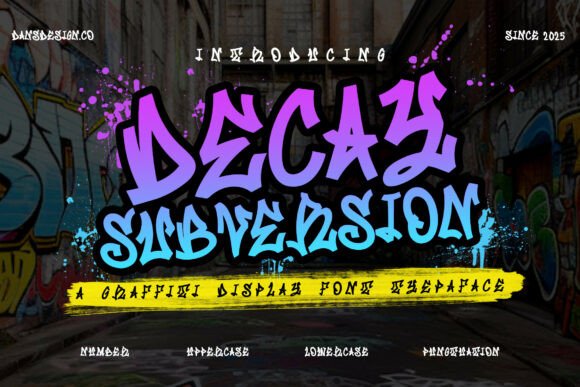
Typography plays a crucial role in visual communication, especially when it comes to making a statement. For designers and creators who want to infuse their work with raw energy and urban flair, Decay Subversion stands out as a powerful tool. This graffiti-style font captures the essence of street art with its chaotic brush strokes and marker-like texture, offering an expressive way to elevate posters, logos, digital media, and more.
Understanding Decay Subversion
Decay Subversion is a hand-drawn, rebellious font inspired by real-world tagging and freestyle graffiti. Its design mimics the unpredictable nature of spray paint and marker tools, giving each letter a unique, dynamic feel. Unlike polished sans-serif or serif fonts, Decay Subversion thrives on imperfection—its uneven lines and bold character shapes make it ideal for projects that demand attention without being conventional.
This font doesn’t just sit well on paper; it resonates with modern audiences who appreciate authenticity and edge in their visuals. It’s commonly used in branding, event promotion, album covers, and even social media content where a strong typographic presence is needed.
Integrating Decay Subversion into Your Creative Workflow
When considering how to use Decay Subversion, it's important to think about your overall creative process. Here are some practical ways to integrate this font before, during, and after your project:
Before the Project Starts
- Define the purpose: Determine whether you need a font that conveys rebellion, urgency, or a gritty aesthetic. If so, Decay Subversion could be a great fit.
- Set the tone: Use it in mood boards or concept sketches to establish a rough, edgy vibe early in the planning phase.
- Check compatibility: Ensure the font works across all platforms and file types you plan to use (e.g., Adobe Creative Suite, Canva, web development frameworks).
During the Design Process
- Layer strategically: Combine Decay Subversion with other typefaces to create contrast. A clean sans-serif paired with this font can balance aggression with readability.
- Use sparingly: Because of its intensity, avoid overusing the font. Apply it to headlines or key phrases rather than full paragraphs.
- Experiment with color and effects: The font looks best when given space to breathe. Try using it in black and white first, then layer in colors like neon or metallics if needed.
After Finalizing the Design
- Test across devices: Confirm that the font renders clearly on both print and digital formats, including mobile screens.
- Export properly: When saving final assets, ensure vector-based formats (like SVG or EPS) retain the font's detail. For web use, consider converting text to outlines or using web-safe alternatives with similar aesthetics.
- Gather feedback: Present your designs to stakeholders or target users to see if the message and style resonate effectively.
Workflow Examples Where Decay Subversion Shines
Here are some real-world use cases where integrating Decay Subversion makes sense:
- Event Promotion: Use the font in flyers for concerts, underground art shows, or pop-up events to communicate excitement and exclusivity.
- Logo Development: Pair it with minimalistic elements for a logo that screams “rebellion” while maintaining brand identity.
- Product Packaging: Add a subversive edge to product labels or packaging for niche brands targeting younger or alternative demographics.
- Social Media Content: Create eye-catching posts with taglines or titles in Decay Subversion to stand out in crowded feeds.
- Album Art and Music Branding: Musicians looking to express raw emotion or genre-specific vibes often turn to this kind of typography for cover art and promotional materials.
How Decay Subversion Works with Other Tools and Assets
To maximize the impact of Decay Subversion, consider how it interacts with other elements in your design toolkit:
- Graphic Software: In programs like Photoshop or Illustrator, apply filters such as noise, grain, or texture overlays to enhance the font’s marker-like appearance.
- Design Platforms: In online tools like Figma or Canva, test how the font performs under different background colors and image layers. Adjust opacity or add shadows for depth.
- Web Implementation: If embedding the font on a website, check browser support and performance. Consider using fallback options or pairing it with system fonts for better loading times.
- Print vs. Digital: For print, high-resolution images or outlined text help maintain quality. On digital platforms, ensure the font is legible at smaller sizes while still capturing its wild essence.
Practical Tips for Using Decay Subversion Effectively
While Decay Subversion is inherently bold, there are several techniques to enhance its usability and effectiveness:
- Contrast matters: Place the font against solid backgrounds or dark tones to highlight its texture and make it pop.
- Scale appropriately: Larger sizes showcase the font’s aggressive style better, but smaller applications should still remain readable.
- Combine with imagery: Overlay the font on photographs of cityscapes, murals, or abstract textures to create a cohesive urban theme.
- Stay consistent: Use the same font family throughout your project to maintain a unified look. If necessary, pair it with complementary fonts that match the spirit of rebellion.
- Consider licensing: Always verify the font’s usage rights before applying it to commercial projects. Some fonts have restrictions on redistribution or require attribution.
Long-Term Use and Quality Control
Using Decay Subversion consistently over time requires careful management:
- Build a style guide: Document how the font is applied, including size ranges, spacing rules, and color combinations for future reference.
- Maintain organization: Keep copies of the font files and any custom versions you might create within your asset library for easy access.
- Evaluate regularly: As trends evolve, reassess whether the font still aligns with your brand or project goals. Sometimes, a bolder or more refined approach may become necessary.
- Backup your work: Save layered files when working digitally so you can tweak the font application later without starting from scratch.
Why Choose Decay Subversion?
In a world where visual content needs to cut through the noise, Decay Subversion offers a distinct advantage. Its hand-drawn aggression and urban roots provide a level of authenticity that pre-designed templates often lack. Whether you're crafting a poster for a local music scene or designing a logo for a startup aiming to disrupt the market, this font adds a visceral element that words alone cannot convey.
Moreover, it appeals to a wide audience—from young creatives drawn to its edgy look to professionals seeking to differentiate their work. The font bridges the gap between artistic expression and functional design, making it a versatile choice for various industries.
Conclusion
Decay Subversion isn’t just another font—it’s a design statement. By understanding how it fits into your workflow and what it brings to the table, you can leverage it to create visuals that speak louder than words. From initial brainstorming to final output, this font has a place in every stage of the creative process. With thoughtful implementation and strategic pairing, you can harness its power to produce compelling, rule-breaking designs that leave a lasting impression.