Thorn Oath: A Font of Aggressive Black Metal Energy for Dark Designs
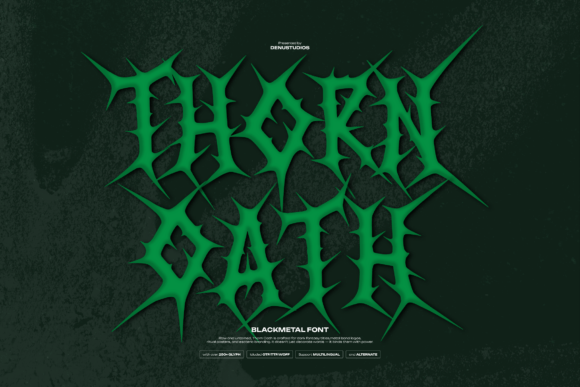
If you're looking to add a raw, chaotic edge to your visual branding or creative projects, Thorn Oath is a font that commands attention. Designed with razor-sharp thorns piercing through each character, it brings an intense and aggressive black metal vibe to any design. Whether you're crafting an underground band logo, designing dark fantasy titles, or developing horror apparel graphics, Thorn Oath isn’t just another typeface—it’s a visual weapon, forged for impact.
Why Choose Thorn Oath?
Fonts play a crucial role in setting the tone of a project. They can evoke emotions, establish credibility, or enhance storytelling. For genres like black metal, horror, or occult-inspired themes, the right font can transform a simple text into a powerful symbol of rebellion or mysticism.
Thorn Oath stands out because it visually embodies the essence of chaos and ritual. Its jagged, thorn-like edges give it a menacing presence that immediately conveys intensity. This makes it especially popular among:
- Underground musicians and bands seeking a bold identity
- Dark fantasy game developers or book authors
- Horror content creators and merchandise designers
- Brands exploring occult or esoteric themes
But while its aesthetic appeal is undeniable, many users overlook key considerations when choosing and applying this font, which can lead to less-than-ideal results.
1. Assuming It Works in All Contexts
One of the most frequent errors is using Thorn Oath where it doesn't fit thematically or stylistically. Its sharp, brutal appearance may clash with more minimalist or elegant designs. For example, trying to use it on a corporate website or a children's book would likely confuse the audience and dilute the brand message.
Better approach: Reserve Thorn Oath for contexts that align with its aggressive, ritualistic energy. Think tattoos, album art, horror posters, or fantasy-themed campaigns. Always consider how the font contributes to the overall tone of your project.
2. Ignoring Legibility at Smaller Sizes
Thorn Oath is not designed for readability in small sizes. The intricate details and jagged edges that make it visually striking can become distorted or unreadable when scaled down. This is a common issue when using the font in body text, labels, or mobile interfaces.
Example: A band might use Thorn Oath for their album title but mistakenly apply it to track listings as well. The result? A confusing and unprofessional layout.
Solution: Use it exclusively for headlines, logos, or short phrases. Pair it with a clean, legible sans-serif or serif font for supporting text to maintain clarity and usability.
3. Overlooking Licensing and Usage Rights
Many designers download fonts from free repositories without checking the licensing terms. This can be risky, especially for commercial projects. While some versions of Thorn Oath may be available for free, they often come with restrictions such as limited usage rights, personal-use-only licenses, or even hidden costs if used beyond certain parameters.
Consequence: If you use an improperly licensed version of the font in a professional context—like a product label or marketing campaign—you could face legal issues or have to rework your design later.
What to do: Always verify the license before downloading or purchasing. Look for clear permissions regarding commercial use, redistribution, and modification. If unsure, consult a reputable font marketplace or contact the designer directly.
4. Not Considering Color and Background Contrast
The effectiveness of Thorn Oath depends heavily on how it interacts with color and background. Its high contrast and aggressive style can easily get lost or overwhelmed if placed against inappropriate colors or busy backgrounds.
Example: A horror t-shirt design using Thorn Oath in white on a black-and-red background might work great, but placing it on a patterned or multi-colored fabric could reduce its impact and readability.
Tip: Test different color combinations before finalizing your design. Use high-contrast pairings like black on white or red on black to highlight the font’s sharpness. Avoid gradients or complex textures behind the text unless you’re intentionally aiming for a layered, chaotic look.
Pairing With Other Fonts
When using Thorn Oath in a composition, balance is key. Because it’s so dominant visually, it should be paired with subtler fonts that don’t compete for attention. A good strategy is to use it for headlines or titles and a more neutral typeface for body copy or subtitles.
Example: An independent black metal band might use Thorn Oath for their name in all caps, then switch to a sleek sans-serif like Montserrat or Bebas Neue for tour dates and venue info. This maintains the aggressive tone while ensuring information is easy to read.
Testing Across Media
Before committing to Thorn Oath for a large-scale project, test it across various media types. How does it look on a poster versus a digital banner? Does it hold up in print or on screen? These questions are critical for maintaining consistency and quality in your output.
Practical step: Create mockups using tools like Adobe Illustrator, Canva, or Figma. Preview your design on both high-resolution monitors and low-resolution screens to ensure it remains impactful and legible in all scenarios.
Enhancing With Effects
Thorn Oath already has a strong visual character, but adding effects like drop shadows, blood splatter textures, or metallic finishes can elevate its presence even further. However, these enhancements must be applied thoughtfully to avoid overcomplication or distortion.
Mistake to avoid: Applying too many effects simultaneously can muddy the font’s clarity and make it appear cluttered or unprofessional.
Best practice: Stick to one or two complementary effects. For instance, a subtle shadow with a slight texture overlay can create depth without overwhelming the design. Keep the focus on the font itself, allowing its form to speak for its meaning.
What to Check Before Using Thorn Oath
Here are a few essential checks to help you avoid missteps and ensure Thorn Oath works best for your needs:
- License agreement: Confirm whether the font is suitable for commercial use and what limitations exist.
- Legibility testing: Zoom in on your design to see if the characters remain clear and distinct at smaller sizes.
- Color compatibility: Ensure the chosen color scheme enhances rather than obscures the font’s features.
- Platform support: Verify that the font is compatible with your design software and rendering across devices.
- Project goals: Ask yourself if the font truly supports the message or mood you want to convey.
Alternatives and Complementary Fonts
While Thorn Oath is unique in its presentation, there are other fonts that offer similar aggressive or ritualistic styles. Fonts like Black Friday, Fontdiner Swanky, or Vagabond might serve as alternatives depending on your specific needs.
It's also wise to explore variations within the same family (if available) to find the right weight or style that suits your application. Some users may not realize that subtle differences in stroke width or spacing can significantly affect how the font reads and feels.
Final Thoughts on Choosing Thorn Oath
Thorn Oath is more than just a font—it's a design statement. Its ability to convey aggression, ritual, and darkness makes it a compelling choice for niche markets and creative professionals who understand the power of typography.
However, success with this font requires thoughtful application. Avoid forcing it into inappropriate contexts, double-check licensing, and always test how it looks across platforms and sizes. By doing so, you’ll harness its full potential and avoid the pitfalls that come with misuse.
In the end, the right font doesn’t just look good—it communicates your intent clearly and powerfully. Thorn Oath, when used correctly, can do exactly that.